Mealtime Rescue Tips for Pets: A Printable Checklist for When Your Cat or Dog Won’t Eat
When a pet skips meals, it can be stressful and confusing—especially when the cause could be as simple as a routine change or as serious as illness. A calm, step-by-step approach helps sort “wait and watch” situations from “call the vet now.” Below are practical checks, gentle appetite-supporting adjustments, and a printable checklist idea that keeps decisions consistent from one mealtime to the next.
Start With Safety: Quick Checks Before Trying Anything
- Confirm the timeline. One skipped meal is often less urgent than 24+ hours—especially for cats, who can decline faster when they stop eating.
- Check water intake and hydration. Watch for dry gums, sticky saliva, sunken eyes, or reduced urination.
- Scan for red flags. Repeated vomiting, diarrhea, lethargy, difficulty breathing, pale gums, bloated abdomen, obvious pain, or suspected toxin ingestion should change the plan immediately.
- Look for mouth discomfort. Drooling, pawing at the mouth, bad breath, or chewing on one side can point to dental pain.
- Consider recent changes. New food, moved bowls, visitors, travel, schedule shifts, new pets, loud construction, or fireworks can suppress appetite.
- Raise urgency for high-risk pets. Very young, elderly, pregnant, diabetic pets, and those with kidney/liver disease or critical medications need faster guidance from a veterinarian.
For toxin concerns or fast triage guidance, keep the ASPCA Animal Poison Control resource handy.
Common Reasons Pets Refuse Food (and What to Do First)
- Stress or environment. Move feeding to a quiet spot, separate pets, reduce competition, and keep a predictable schedule.
- Food fatigue or preference. Avoid frequent brand-hopping. When switching foods, transition gradually over 7–10 days when possible.
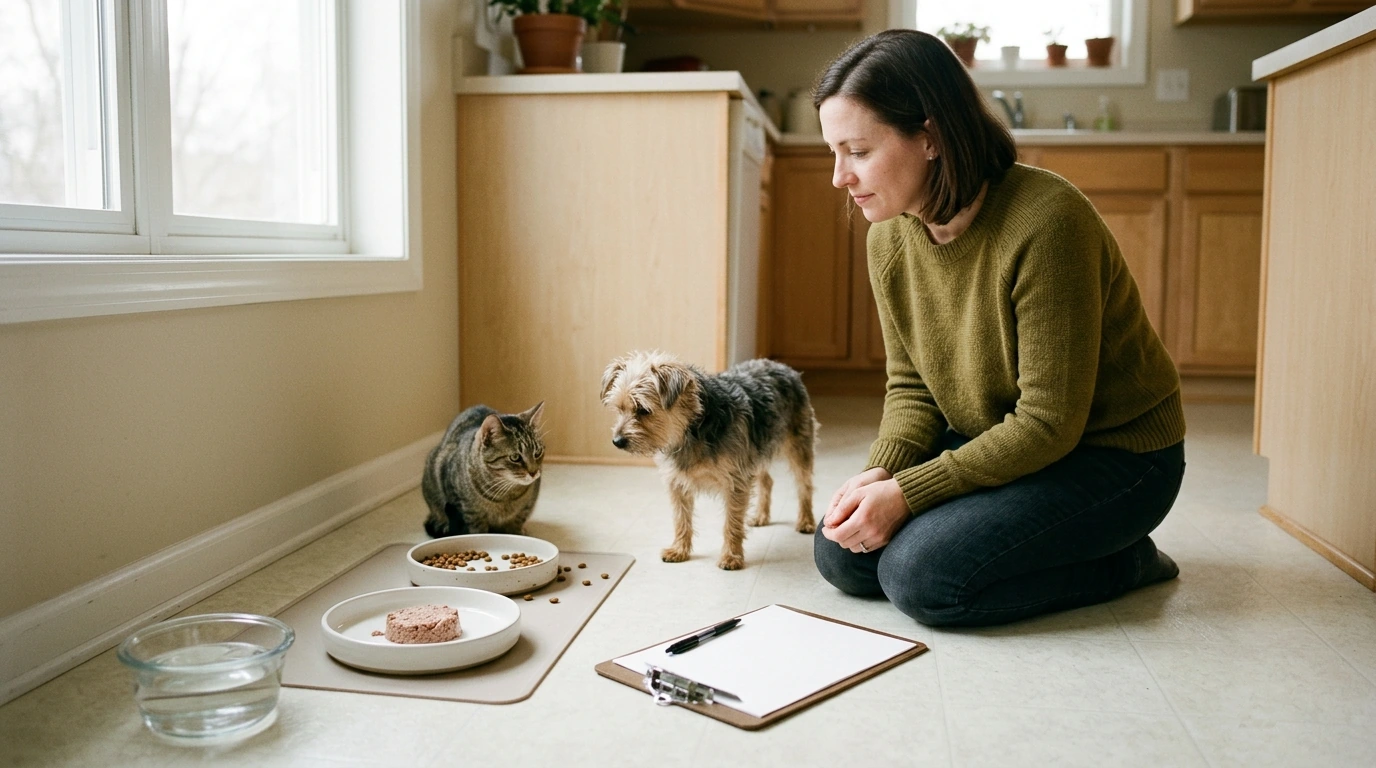
- Bowl and setup issues. Try a wide, shallow dish for cats; consider an elevated bowl for some dogs; wash bowls thoroughly to remove odors and old oils.
- Nausea or stomach upset. Offer smaller portions and skip rich treats. Note grass-eating, lip-licking, or gagging.
- Dental or mouth pain. Choose softer textures temporarily and schedule an exam if signs persist.
- Medication side effects. Check timing with meals and call a veterinarian before changing doses or stopping any medication.
Mealtime Rescue Moves: Gentle, Practical Appetite Boosters
- Warm the food slightly. A little warmth boosts aroma. Test temperature carefully and avoid hot spots.
- Add moisture. Stir in a spoonful of warm water or pet-safe broth (no onion/garlic) to increase palatability and hydration.
- Go smaller and more frequent. Several mini-meals can feel easier than one full portion.
- Try a puzzle feeder or slow feeder. Helpful for pets that seem bored, anxious, or overly focused on the “event” of eating.
- Reduce pressure. Offer food for 15–20 minutes, then pick it up to reinforce routine and keep food fresh.
- Limit treats and table scraps. Otherwise it’s hard to tell whether appetite is truly low or just selective.
- In multi-pet homes, feed separately. This prevents guarding, intimidation, and speed-eating that can lead to nausea.
Troubleshooting by Symptom: Decide What Happens Next
If appetite loss is paired with other changes, let the symptoms steer the next step. When you’re unsure, a quick call to your veterinary clinic can prevent a long night of second-guessing. The American Veterinary Medical Association (AVMA) pet care resources can also help you understand what’s urgent.
Fast Guide: Appetite Loss Scenarios and Next Steps
| What You Notice |
Try First (Same Day) |
Call a Vet If |
| Skipped one meal but acting normal |
Quiet feeding area, warm food, offer small portion, remove after 20 minutes |
Refuses next meal or shows any red flags |
| Sniffs food, lip-licking, drooling, swallowing repeatedly |
Smaller meals, bland routine, monitor water intake |
Vomiting, dehydration signs, or no improvement within 12–24 hours |
| Gagging, pawing at mouth, foul breath, chewing one side |
Offer soft food; avoid hard chews; check mouth if safe |
Any visible injury, swelling, bleeding, or ongoing refusal |
| Lethargy with appetite loss |
Keep comfortable, note temperature if trained/safe, offer water |
Same day—especially with vomiting, diarrhea, pain, or breathing changes |
| Cat not eating for 24 hours |
Contact veterinarian; minimize stress; offer aromatic wet food |
Immediately if also vomiting, hiding, or jaundice; cats can decline quickly |
Turn a One-Time Fix Into a Reliable Routine
Printable Support: A Simple Checklist for “Pet Won’t Eat” Moments
If you’d like a ready-to-use version, the Mealtime Rescue Tips printable pet feeding checklist (digital download) is designed to make those “is this normal?” moments faster and more consistent.
Helpful Digital Extras (Optional)
When to Seek Veterinary Help Without Waiting
FAQ
How long can a cat or dog go without eating before it becomes dangerous?
It depends on age, health conditions, and symptoms, but cats generally need faster attention because prolonged appetite loss can lead to serious complications. As a rule of thumb, contact a veterinarian if a cat hasn’t eaten for about 24 hours, a dog hasn’t eaten for 24–48 hours, or sooner if any red flags appear.
What can be safely added to food to encourage a pet to eat?
Warming the food, adding a little warm water, or using a small amount of pet-safe broth (no onion or garlic) can improve aroma and moisture. Avoid fatty, spicy human foods and avoid making sudden, major diet changes unless a veterinarian advises it.
Should food be left out all day if a pet won’t eat?
Timed meals (putting food down for 15–20 minutes, then removing it) often help build routine and make it easier to track true intake. Free-feeding can be appropriate for some pets with medical needs, so follow your veterinarian’s guidance if your pet has a condition that affects feeding schedules.
Recommended for you












Leave a comment