

A minimalist home can still feel warm and personal—without becoming a magnet for dust, decision fatigue, and visual noise. The key is a repeatable décor routine that limits what comes in, gives every item a purpose, and makes resetting a room fast. Below is a simple, modern approach to styling that stays clutter-free through seasons, guests, and everyday life.
Effortless minimalism isn’t an empty room or a strict rulebook. It’s a space that’s easy to maintain because every visible item earns its place.
If your space feels “busy,” it’s often not about the number of things—it’s about the number of decisions your eyes have to make. A cohesive material mix and a few confident pieces reduce that mental load, which can support a calmer environment overall (see the American Psychological Association’s discussion of stress and the environment).
The goal of a daily reset is not perfection—it’s returning the room to a baseline that feels clear and functional. Think of it as “closing duties” for your home.
| Room | What to reset | Time target |
|---|---|---|
| Entry | Keys/Wallet tray, shoes to one row, clear console top | 2 minutes |
| Living room | Coffee table to 1–2 items, fold throw, align pillows | 3 minutes |
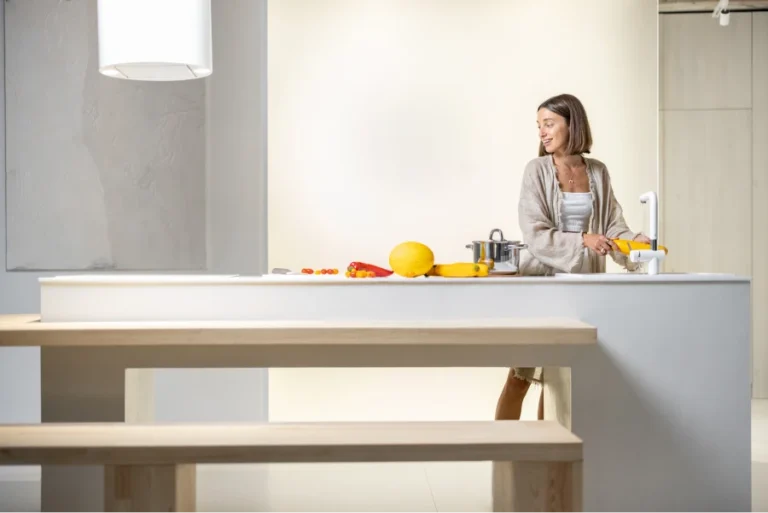
| Kitchen | Clear counters, corral oils/tools to one tray, wipe one hotspot | 3 minutes |
| Bedroom | Nightstand to essentials, hang or basket clothes, smooth bed top layer | 2 minutes |
Daily resets keep clutter from spreading; weekly edits keep décor from multiplying. This is where “minimal” becomes sustainable.
For practical organizing frameworks and category-based thinking, the National Association of Productivity & Organizing Professionals offers helpful resources at NAPO.
If minimalism has ever felt cold, the fix usually isn’t “more stuff.” It’s better layers.
For bedrooms, keep the “visual diet” especially clean: softer lighting, fewer small objects, and a nightstand that’s functional first. A calmer bedroom environment supports better rest (see the National Sleep Foundation’s guidance on sleep hygiene and bedroom environment).
If you want a structured plan you can follow and repeat, consider The Effortless Décor Routine | Minimalist Home eBook for How to Keep Décor Clutter Free and Organized | Modern Home Styling Guide for Calm, Simple Spaces, designed to help you maintain calm, modern rooms without constant re-styling.
Pair your calmer space with calmer habits, too: Gentle Stretches With Yoga: A Beginner-Friendly Digital Guide for Flexibility | Easy Yoga Poses for Home Practice offers simple movement you can do at home, and Own Your Space: Confidence for Solo Life – A Practical Guide on how to build confidence to live alone, Embrace Independent Living, Build Self-Reliance, and Thrive on Your Own supports a mindset of grounded, capable living—perfect for keeping your home routines steady.
Lean on texture and lighting instead of quantity: one warm lamp, one soft throw, and one tactile accent (ceramic or wood) can make a room feel inviting while keeping surfaces clear.
Aim for 1–3 items. Use a tray or a small book stack as the base and add one sculptural object, leaving enough open space to use the table without moving anything.
Do a quick weekly edit to prevent décor creep, plus a seasonal rotation every 3–4 months for items that multiply easily, like candles, vases, and holiday accents.











Leave a comment