Growing Fuller, Healthier Eyebrows: A Practical Guide to Thicker Brows Naturally
Fuller brows come from consistent care, realistic timelines, and reducing the habits that quietly thin hair. The goal isn’t instant density—it’s creating the best conditions for follicles to do their job while preventing breakage and irritation. Below is a practical, low-effort plan to support healthier-looking brows over the next 8–12 weeks.
What “thicker brows” really means
“Thicker” can mean a few different things, and knowing which one you’re chasing keeps expectations realistic.
- Density vs. width: Density is having more hairs per area. Width is reshaping the brow line (which can make brows look fuller even without new growth).
- Temporary vs. longer-term gaps: Some sparse spots bounce back after over-plucking or irritation. Others may persist due to scarring or certain medical conditions.
- The most reliable aim: Healthier follicles, less breakage, and better retention of the hairs you already have.
Eyebrow growth basics: cycles and timelines
Eyebrows grow in repeating cycles: growth, transition, resting, and shedding. That’s why day-to-day changes can feel invisible—even when you’re doing the right things. A slow start is normal: early “progress” often looks like less shedding and fewer broken hairs before you notice real filling-in.
Typical brow progress checkpoints (healthy follicles, consistent routine)
| Timeframe |
What may be happening |
What to do |
| Week 1–2 |
Less breakage/irritation as grooming stress drops |
Stop tweezing new growth; switch to gentle cleansing; avoid harsh rubbing |
| Week 3–6 |
Early regrowth may appear as fine, lighter hairs |
Continue conditioning; keep skin calm; photograph progress weekly |
| Week 7–12 |
Hairs can look darker/stronger; mild filling-in possible |
Maintain routine; trim only long hairs; consider professional shaping if needed |
| Beyond 12 weeks |
Results stabilize; stubborn sparse areas may remain |
Evaluate triggers (over-plucking, dermatitis, nutrition, medications); consider clinical advice |
Common reasons eyebrows look sparse
Most “mysterious” thinning comes down to repeated trauma, inflammation, or an underlying health trigger.
- Frequent shaping: Over-plucking, waxing, threading, or repeatedly “cleaning up” at home.
- Skin inflammation: Eczema, seborrheic dermatitis, or contact allergy from cosmetics can interrupt healthy growth and increase shedding.
- Product migration: Retinoids, acne treatments, or strong exfoliants creeping into the brow area can irritate skin and weaken hair.
- Stress, sleep, and nutrition: If scalp hair also feels thinner, lifestyle or nutrient shortfalls may be contributing.
- Hormones, thyroid, medications: Sudden or patchy loss is a reason to get medical guidance. For background on common causes, see the Cleveland Clinic overview of eyebrow hair loss and MedlinePlus on thyroid diseases.
Daily habits that support thicker, healthier brows
- Gentle cleansing: Remove makeup without scrubbing. Use a soft cotton pad and a mild cleanser, and swipe in the direction of hair growth.
- Conditioning: A lightweight, non-irritating conditioner or oil can reduce breakage by improving hair flexibility (especially if brows feel dry or wiry).
- Hands off: Avoid rubbing brows when stressed, when towel-drying, or when removing eye makeup.
- Sun protection: UV can irritate skin and weaken hair. Protect surrounding skin daily; if sunscreen buildup bothers your brows, keep it off the hairs while still covering the skin around them.
A simple 5-minute brow routine (morning and night)
Morning (about 2 minutes)
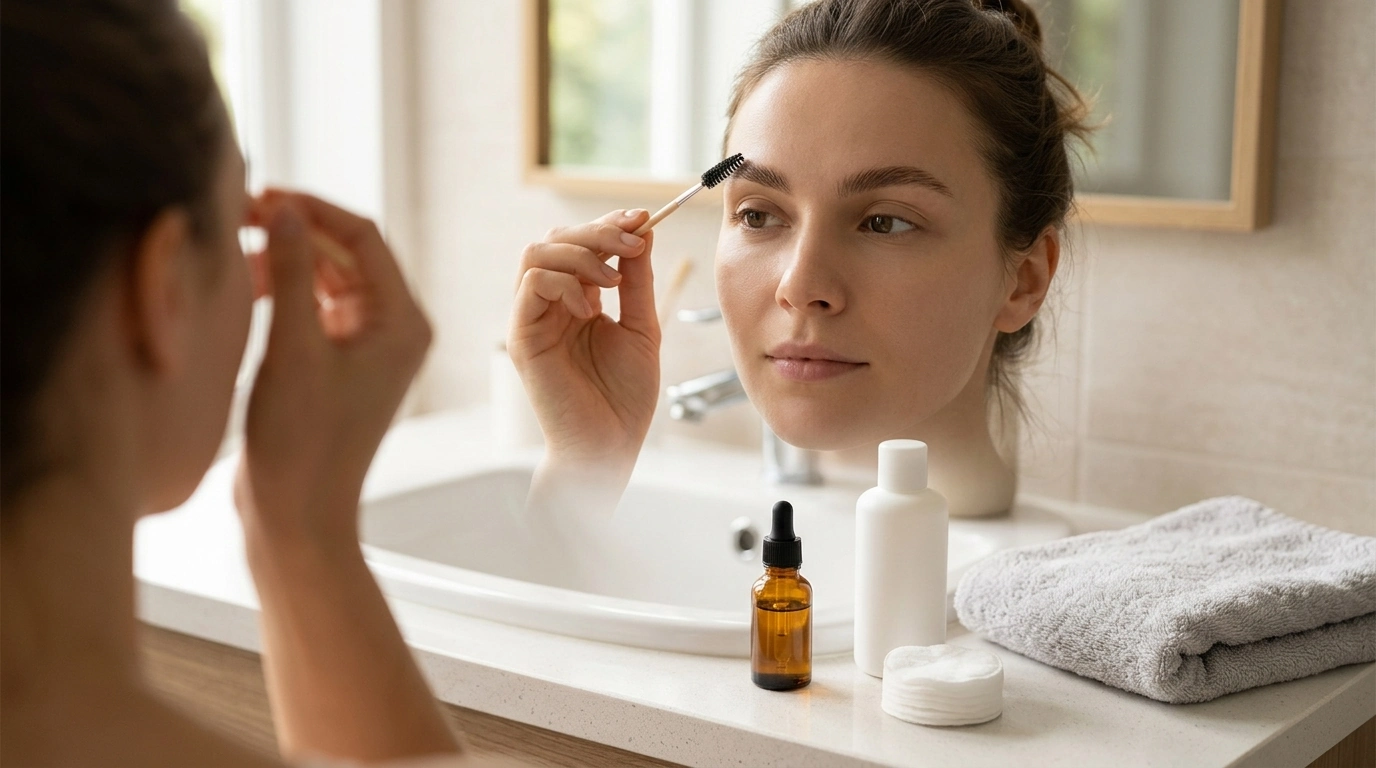
- Brush brows lightly with a clean spoolie to train direction. Don’t brush aggressively or against growth.
- If using makeup, stick with gentle formulas that don’t require heavy rubbing to remove.
Night (about 3 minutes)
- Cleanse carefully and pat dry—no towel friction over the brow line.
- Apply a tiny amount of nourishing product to brows and massage very lightly for 10–20 seconds (think: pressure that moves skin minimally).
- Stay consistent. Most progress comes from steady care, not “stronger” techniques.
Weekly tracking
Take one clear photo in the same lighting and position each week. Brows change gradually, and photos prevent the common trap of over-correcting too early.
What to avoid (the most common growth killers)
Nutrition and lifestyle: supportive, not magical
When to consider professional help
- Sudden, rapid shedding; pain; scaling; or redness that doesn’t improve with gentle care.
- Patchy loss, broken hairs with itching, or signs of infection.
- History of scarring, burns, or long-standing sparse areas that never regrow.
- A dermatologist can evaluate underlying causes and discuss evidence-based options. The American Academy of Dermatology has guidance on when to seek care.
Tools and products that make consistency easier
If you want a step-by-step plan you can follow day by day, Growing Fuller, Healthier Eyebrows – A Practical Guide on How to Make Your Eyebrows Grow Thicker Naturally maps out an 8–12 week approach with simple checkpoints.
For stress support (which can help reduce shedding triggers), Gentle Stretches With Yoga: A Beginner-Friendly Digital Guide for Flexibility can make it easier to build a calming nightly routine.
A step-by-step guide for long-term results
FAQ
How long does it take for eyebrows to grow back?
Noticeable improvement often takes about 6–12 weeks, depending on age, past plucking, and skin health. Weekly photos help you see gradual changes, and avoiding tweezing during regrowth prevents constant setbacks.
Do oils like castor oil help eyebrows grow thicker?
Oils mainly condition brow hairs and may reduce breakage, which can make brows look fuller over time. Patch-test first and stop if you notice redness, itching, or bumps—irritation near the eyes can slow progress.
Why are my eyebrows thinning even though I don’t pluck them?
Common causes include skin inflammation (like dermatitis), friction from makeup removal, nutritional shortfalls, stress, hormonal shifts, thyroid issues, or certain medications. If thinning is sudden, patchy, or comes with scaling or pain, a clinician can help identify the trigger.
Recommended for you












Leave a comment